
Museums, events, and cities around the world are responding to the desire for more interactive artwork and exhibits, rather than the stodgy “look but don’t touch” hush of a conventional museum gallery. Burning Man art is answering that call, and is a community-based and highly interactive experience from creation through its eventual exhibition. Every year the Black Rock City Honoraria Program supports approximately 75 artworks, funded by the nonprofit Burning Man Project and generous donations from Burners like YOU, bringing more art to Black Rock City and the world. On playa, the Art department provides logistical support to almost 400 works of art destined for Black Rock City.
Art That Travels: From Regionals, to Black Rock City and Beyond
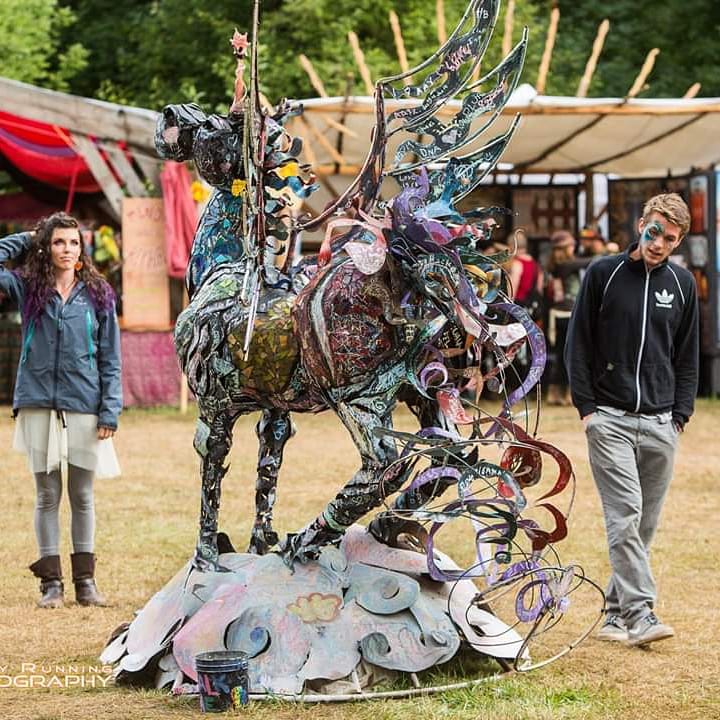
 Not all Burning Man art begins in Black Rock City, however. Some art starts out in other places, including Burning Man Regional Events, and then comes to the “big burn” (as Regional folks tend to call it) in Northern Nevada. I talked to Miki Masuhara-Page, a Hawaiian artist living in Portland, OR, who has brought her sculpture “Cosmic Messenger” to Black Rock City in addition to other events and festivals including SOAK, the Portland Regional burn and the Portland Winter Light Festival. “One of the big differences between a Regional Event and the playa is definitely scale,” she says. “The playa is massive, both in physical size and the number of people.”
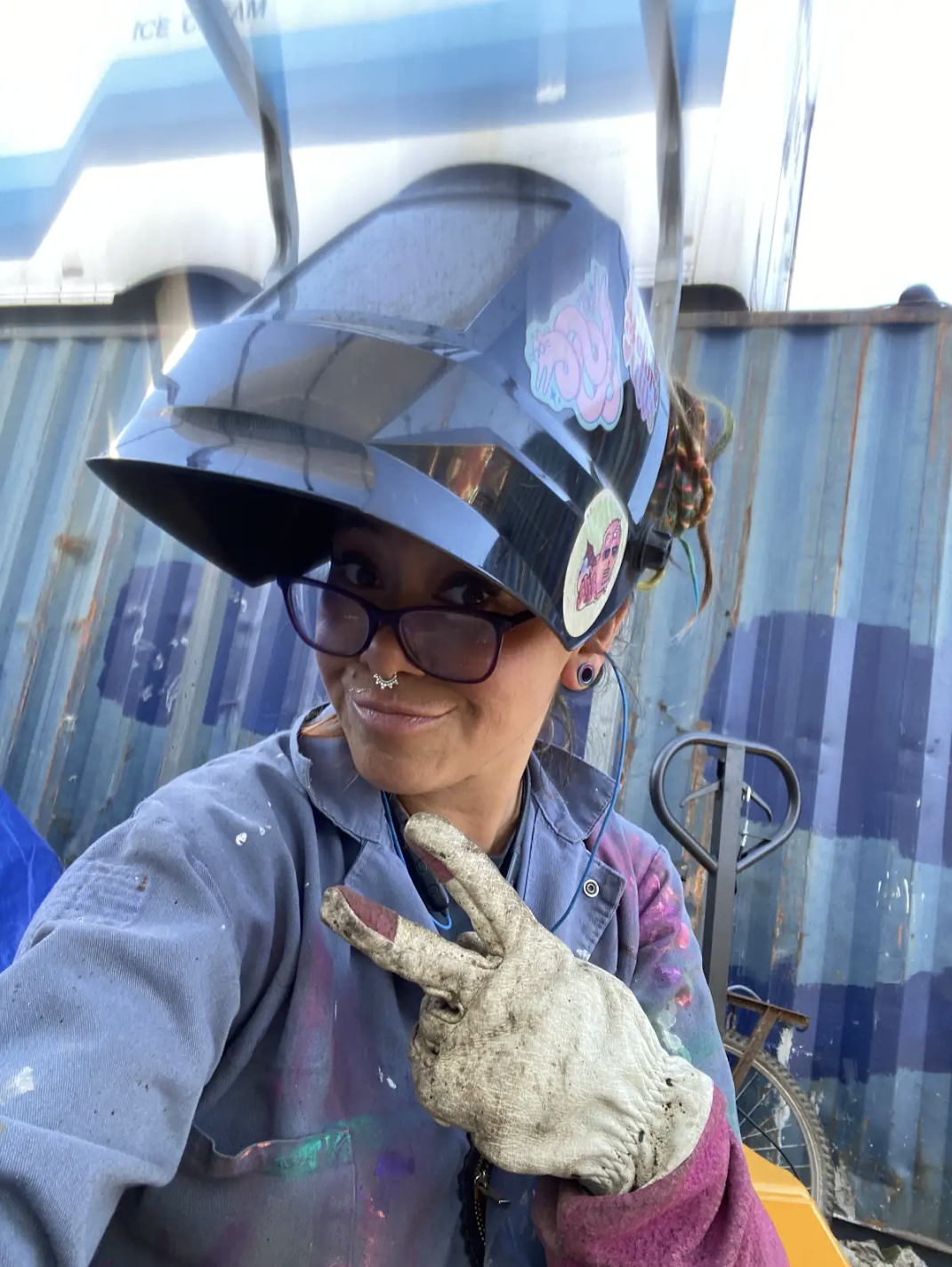
Taking art from a smaller Regional Event to Black Rock City is certainly a jump in size, scale, and logistics. But it’s another experience going from the playa to placing art in a city. Even after playa, Burning Man art continues to challenge the norms and expand people’s ideas of what art can be. Miki says, “The vibe of the crowd is totally different. Yes, all types of people go to Burning Man, but they go knowing they’re going to see some truly wild stuff. Out in the world, people aren’t really expecting that. They’re just going about their day and suddenly there’s this giant magical creature in front of them. People seem to love the piece everywhere, but honestly, out in public is where I see the most joy and surprise, just because it’s so far outside what they’d normally see.”
“My goal has always been to make people smile, spark a little wonder, and remind people that imagination is a powerful and magical force. The best way to do that in my opinion, is to get the art out there in other places for them to experience it for themselves.” – Miki Masuhara-Page
“Burden of the Beast” Carries Its Message from the Desert to the Garden
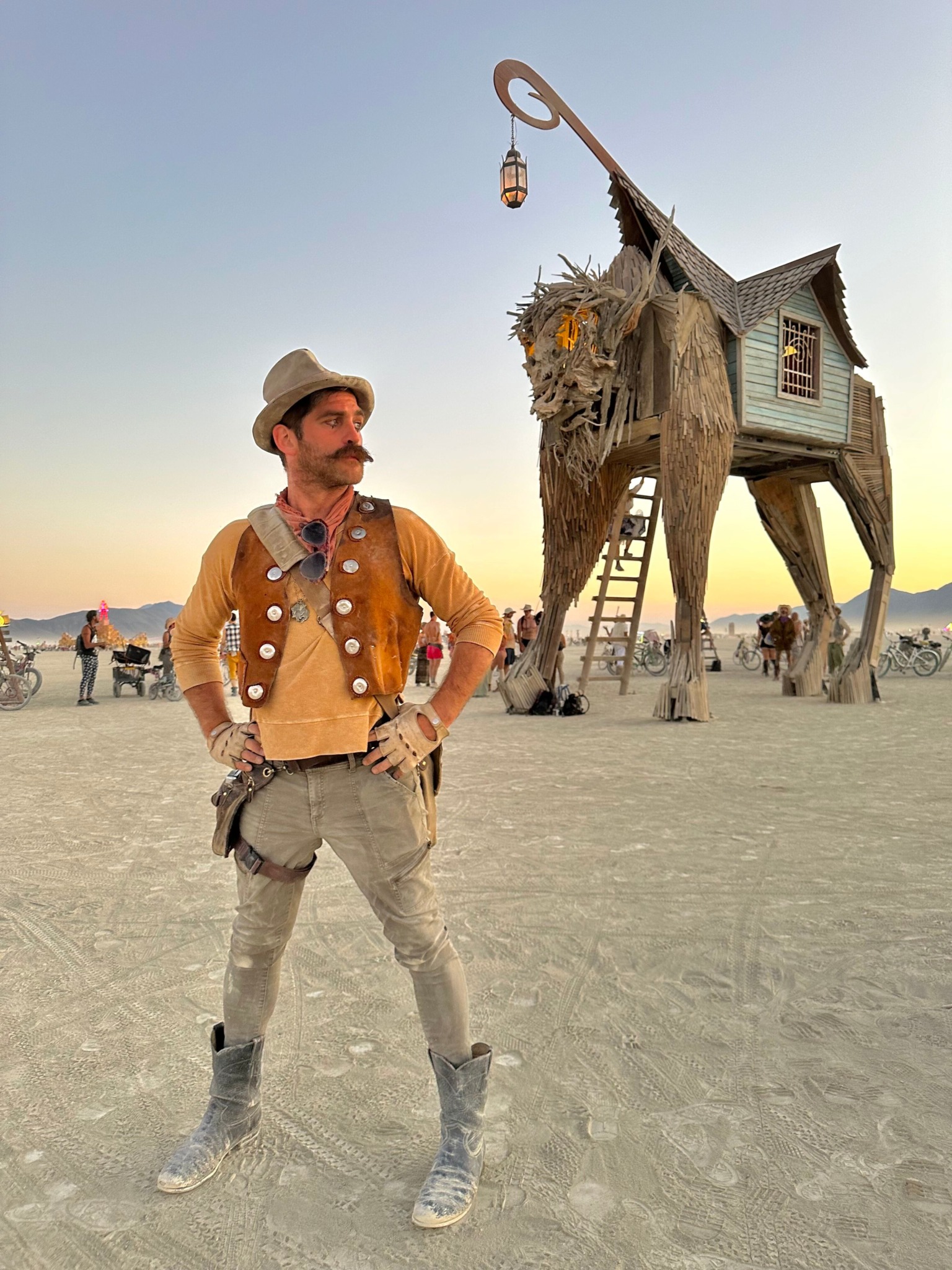
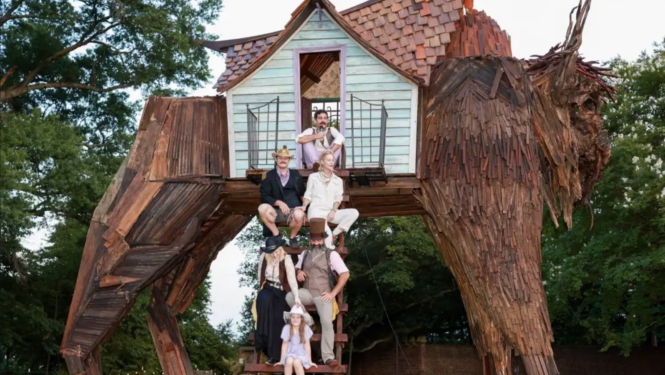
New Orleans-based artist (and actor, and stunt performer, and generally interesting guy) Walker Babington recently had a four-month solo exhibition of his work at The Hermitage Museum and Gardens in Norfolk, Virginia. The exhibit featured two of his beloved Black Rock City artworks, “Burden of the Beast” and “Zozobot.” In between working on a giant werewolf puppet (“New Orleans is kinda like living at Burning Man”), he shared a similar sentiment about the difference he felt between art in Black Rock City versus art at The Hermitage.
“There’s something about [my art] being at a Smithsonian-affiliate museum that makes people think ‘I shouldn’t touch this’ like it’s a centuries-old Grecian urn,” he said. “Luckily, people brought lots of kids by, and kids are kinda little Burners. They’ll run right up and start bouncing on the work. When I get a six-year-old’s approval, I know I’ve done something right.”
I was curious how his art ended up crossing the US, from the playa to The Hermitage in Virginia; it’s a leap I imagine many artists would dream about for placement after Black Rock City. Walker describes himself as creating “large-scale, dreamscape, symbolist folk art”, and he says it’s been inspired by participating in Black Rock City. His first year on playa was 2009, and he didn’t begin creating this type of art until 2015. Walker was participating in the Art department’s 2023 “Art Speaks” series of artist talks in Black Rock City, and was approached afterward by Carrie Spencer, a curator at The Hermitage. The messaging behind his Black Rock City Honoraria artwork “Burden of the Beast” (climate change and rising waters) is particularly relevant to Norfolk and The Hermitage, as it’s in a similar flood zone to New Orleans. The Hermitage launched an exhibition of Walker’s work along with programming related to rising sea waters, and a New Orleans-themed carnival event.
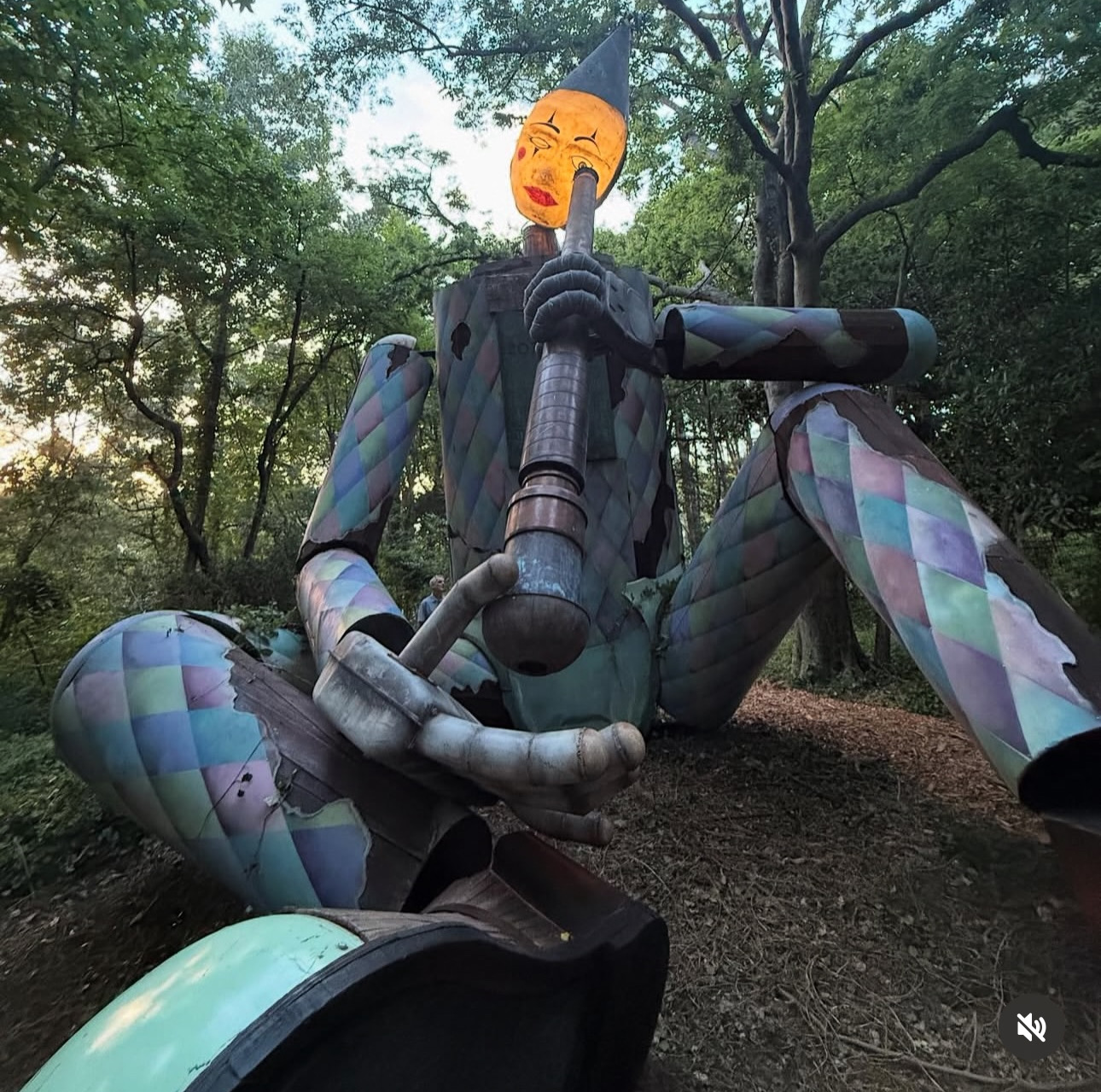
Enjoy “Carnival of the Beast,” a whimsical garden party celebrating “Burden of the Beast” at The Hermitage:
It wasn’t by chance that Carrie Spencer was on playa at the “Art Speaks” series, however. The Hermitage has a history of bringing Burning Man art to the eastern US, and to people who wouldn’t otherwise encounter it. In 2017, their small but mighty staff took on the task of designing and curating the first-ever large scale museum exhibition of Burning Man art and culture. “The Art of Burning Man” broke their all-time attendance record with more than 25,000 visitors during its four-month run, galvanized an entire new Regional group of Burners who participated in the installation and events surrounding the exhibition, and resulted in the museum’s demographics continuing to shift younger even after “The Art of Burning Man” closed. I was lucky enough to be involved from the Burning Man Project side to help make this exhibition happen, and have previously written about the experience near the beginning and end of the show’s run.
Experiences that Change How People Engage, and What They Expect from Art
Carrie is a great person to speak with about the cultural differences between art in Black Rock City and art in the world, and she had a fascinating perspective about encouraging different types of interaction off playa with visitors who may not be familiar with Burning Man. “Education and interpretation are part of our practice at the Hermitage. We want to challenge them; to encourage them to contemplate topics they normally wouldn’t; to ask questions; to find answers. It’s our job to guide them through that process.”
I wanted to know more about what kinds of supplemental material and events Hermitage teams created to enrich visitors’ understanding and experience of the art. “Thoughtful activation of the artwork is a big part of our exhibitions… Activation through public programs is essential for us.” The Hermitage has definitely put in the effort to contextualize the experience of Burning Man art, whether it’s programming around rising sea waters (as during Walker’s exhibition), or “The Art of Burning Man,” which included a wide variety of public programs, workshops, and interactive events.
Following the blockbuster “Art of Burning Man” exhibition, The Hermitage’s audience and the type of artists they exhibit have both changed.
“Artists see that we are willing to take risks, try new things, and support different types of artists,” Carrie added. This directly impacts how visitors engage with artwork. Following their interactive experiences with art from Burning Man, Carrie reports that visitors were not only more willing to interact with the art, they almost expected to be able to touch and interact with it.
The need to guide outside audiences towards interaction echoed what Miki said to me when discussing the difference in behavior: “At Burning Man, interaction of some sort feels like the norm. Out in the default world, though, people are so used to art being hands-off. They see something and assume you absolutely cannot touch it. Watching that moment click, the surprise of ‘wait, I can actually touch this?’ and the expression on their faces grow even more full of joy, shock, and delight, that’s honestly one of my favorite things.”
I’d love to hear your experiences with Burning Man art found in the wild. Is there Burning Man art near where you live? Have you shared an off-playa Burning Man art experience with loved ones who haven’t been to playa? Tell us about it in the comments.
Art that Brings Burning Man’s Creativity, Connection, and Fun to the World
Burning Man art in the world is changing the way people experience, create, and understand the purpose of art — sparking a more curious, hands-on process. This has in turn increased the public demand for more participatory, fun artwork. When Burning Man art comes to town, people show up en masse to engage, play, and learn. The “No Spectators” exhibition of Burning Man art at the Renwick Gallery of the Smithsonian Art Museum in Washington, D.C. broke attendance records. That same traveling Smithsonian exhibition broke the all-time attendance record for the Cincinnati Art Museum, a museum that had been in existence for 113 years at the time of the exhibition. That’s not all: it also broke attendance records when it landed at the Oakland Museum of California.
Bringing the connection and fun of Burning Man art to people who wouldn’t otherwise experience it is a common theme I’ve heard from artists who place art from Black Rock City in civic environments, and from Burners who were able to bring their families to these types of events. Walker says about his solo show at The Hermitage, “My entire family is from the East Coast, almost entirely between Maryland and the Carolinas. They’re not the type to venture into the desert, so my parents, siblings, cousins, aunts, uncles, and in-laws all finally got to experience these projects for the first time.”
Whether it’s at a museum, a light art festival, a Regional Event, or a street corner in a city near you: Burning Man art may be closer than you think. (Don’t turn around, it’s right behind you!) The Art department maintains a map of Burning Man art in the world: past, future, and present for you to explore. Miki Masuhara-Page and Walker Babington are only two of the many Burning Man artists who are bringing art out into the world and helping even more people experience this particular interactive, mind-opening way of thinking differently about what art in the world can be.
Cover image of “Burden of the Beast” by Walker Babington at The Hermitage Museum & Gardens, 2025 (Photo courtesy of Walker Babington)